A World War 2 Spy Trainer makes a poignant return to her former base at Beaulieu Manor, Hampshire.
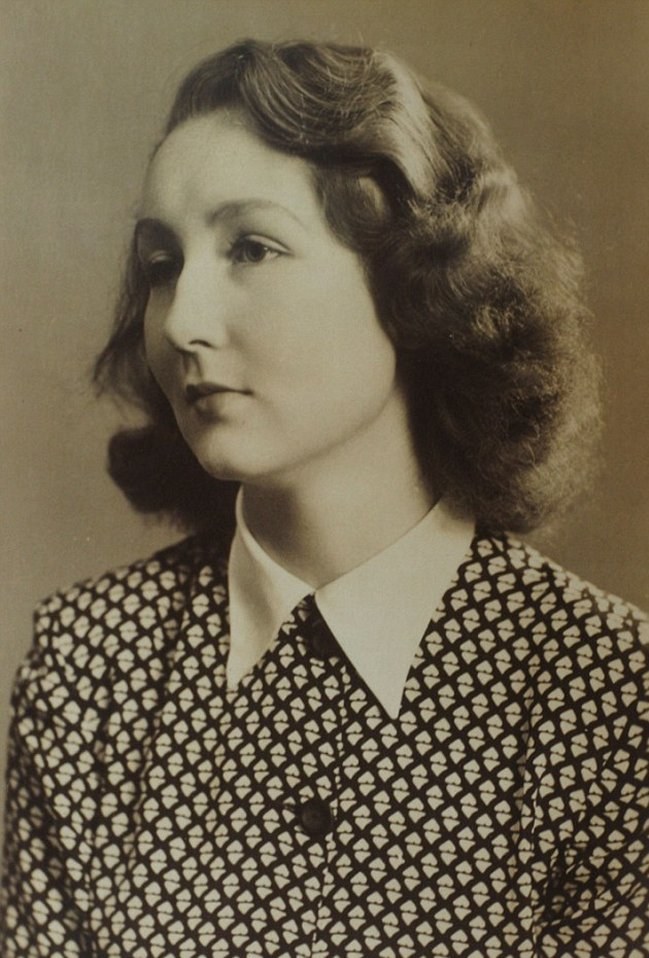
THE DECOY (Monologue) – Paul Canon Harris
SET: sparse, ecclesiastical style clear window, memorial plaque on wall, short church pew/wooden seat. Warm “evening” lighting.
NOREEN, smartly dressed, mid-seventies, standing in cloisters at Palace House, Beaulieu Manor, Hampshire, in front of a memorial plaque. Warm late summer evening in 2000. She holds a white rose.
NOREEN reads aloud:
‘Remember before God those men and women of the European Resistance Movement who were secretly trained in Beaulieu to fight their lonely battle against Hitler’s Germany, and who, before entering Nazi-occupied territory here found some measure of the peace for which they fought.’
NOREEN sits down on seat
Did they? Did they find peace here? “Some measure of peace”. I’m not sure. Oh, I hoped they did, then and now. I hoped to God they did but looking back they must have been terrified. They knew the score – they were left in no doubt. Their chances of survival were slim, little more than a couple of months in some cases – especially the radio operators. Living on their nerves, moving from place to place with secret identities, not knowing whom to trust. No wonder so many had nervous breakdowns after the war, the lucky ones – ha – who survived. Peace, they were fighting for peace for others, but I can’t see how they found peace for themselves.
How do you measure peace? I don’t know. Quiet? Absence of worries? Soothing country settings don’t guarantee that. They were scared – desperately scared. I remember you could sense the fear here, almost smell it. Agents, instructors, even the young women like me – we all knew the stakes were high. Oh yes there was plenty of jollity – of course there was – young people not knowing how long we had, what the future would hold. The whole set-up here, our whole lives seemed a desperate gamble, almost a futile gesture. Better to die doing something than die wondering, I suppose.
NOREEN stands up, goes back to the plaque, runs her hand slowly over the inscription, rests there for a few moments. Then moves to look out of window. Sits on ledge.
“Secretly trained to fight their lonely battle”. Brave young men and women – with medals to prove it – posthumously for most of them. Brave – were they brave? What is bravery? Blotting out fear, denying its existence? Overcoming it? Or facing it, staring it in the eye and refusing to look away.
They were afraid, frightened of what lay ahead, literally jumping in most cases into the unknown. Courage is not the absence of fear: it is the willingness to do the thing one fears. And they all did, leaving for their missions regardless. They were frightened, of course they were. But they faced their fear. And left.
I was there when they left. I watched them. I feared for them. I felt guilty because of them. Staying here, in this beautiful place, I felt so guilty – a sort of shame. I told myself then, and try and convince myself now, that I would have gone, done my bit like them. But would I have done? Really? I am not a brave person, foolhardy sometimes for sure but brave? I don’t know anymore.
Eighteen! Mon Dieu! Was I only eighteen? A lifetime ago. When I think how I want to protect my children now, even as middle-aged adults – ridiculous. My mother would have had forty fits if she had known what I was doing. What I was mixed up in. War – planned by older men – in which young people die. Were they wrong? Wrong to involve us? Even now I don’t have a clue who recruited me – or why? Military family – plenty of them in those days. Good at languages, fluent in a couple – yes, I guess that was a factor. But me? Scatty then, scatty now. Hard to believe. My looks – possibly, I was a pretty face. I had been told so more than once even before they got to me. If I am honest, I seemed drawn to slightly unsuitable men. Once a sailor’s daughter always a sailor’s daughter. Oh mother, you were right to worry – but I hated you for it – at least back then I did. What a hypocrite! When I think what a worrier I became. Maybe that’s the nature of motherhood.
So, I was the right sort, from the right stock, nicely spoken, clever with languages, more than a pretty face but not altogether a good girl. (laughs ruefully) Bait, perfect bait for over-sexed men heading for war, expecting an early death. Ideal. Chosen by one set of men to trip up another set of men. My wartime effort. My sacrifice. My secret.
NOREEN pauses – looking out of window – then moves back to the seat
Secrets – the backbone of my life back then. What a strange ragbag bunch we were – public school boys become military heroes, nice gals like me and rough squaddies, criminals even. Brought together by war – held together by secrets, our secrecy signed and sealed in black and white under the threat of the Official Secrets Act. (Laughs bitterly)
No degree to my name – but a first-class liar – government approved. Lies my whole life then was based on lies. Keeping secrets seemed passive at first – don’t say anything, admit nothing. But then the lies come – necessary, convenient, justifiable even. Secrets and lies, lies and secrets – which comes first? – I still don’t know. They need each other. Secrecy is addictive. I value truth but the truth is I’ve needed secrets all my life. I’m an addict – they taught me to lie, I’ve never lost the gift. I lied to friends, family – even my mother. That was the one that bothered me most. Did she really believe me? Me, her precious daughter – a secretary in the Department of Agriculture and Fisheries – Agg and Fish. At least it was a Government Department – but hardly the kudos of the Wrens. “My daughter’s doing her bit.” Oh, I certainly was. I would have loved to have seen her face if she’d found out. Too late – this lovely, bitter-sweet weekend here only possible now. The passage of time. I kept my secret – perhaps too well. Would it have mattered so much if I’d told her in those last years? She loved Churchill – would have been so proud to have known I was part of his Secret Army – well sort of. It would have brought a little joy, some light into her last gloomy years.
NOREEN pauses – looks back up at memorial plaque
“Remember before God those men and women” – such a strange phrase. Most people nowadays won’t have a clue what it means – especially children. Remember those people before God remembers them? Remember those people before we remember God? Stand in front of God and remember them – our friends? Lots of us might have a thing or two to say about that. The irony is I don’t think I really gave God too much of a thought back then. Well – how many eighteen-year olds ever do? No, faith was a much later thing – a surprise in middle age. Odd really – I completely get why so many ditched religion after the war – especially men. The horrors they saw. Expected to come back and take up where they left off. No counselling, nothing – just get on with it. The only time I thought about God or faith was when I felt guilty. So guilty. Guilt – half-sister to lies and secrets. I just carried it around, took it for granted. I felt guilty for lying, guilty because my war was a cushy one, survivor guilt they call it now – almost a cause for sympathy but at the end of the day it’s still guilt. I was a double liar. I lied about my work and I lied in my work. A decoy girl – a honey trap.
Training agents to avoid being followed, to keep rendezvous – all those tricks of the trade played out on the streets of sunny Bournemouth – was like a game – and yet crucial to their chances of survival. Oh, I was proud of that – it was fun. I felt important. But decoy girl – that was different – lying again deliberately to trip up a brave man – to trap him. Final hurdle – make or break for some of them and they didn’t even realise it was happening.
One of them stands out. I’ll never forget him. A Dane, tall, blond – gorgeous. We met, set up by our bosses as usual at the Royal Bath Hotel. A warm spring evening, full moon – the works. I persuaded him to wander out onto the terrace. He didn’t need much persuading. I can see him now – leaning back against the balustrade, gazing at the sea, gazing at me. He became all sentimental. They often did. He asked me whether we could spend the following Sunday together. I accepted his invitation but knew full well that I would not be keeping my promise. But he’d given me my lead, my chance to probe, enquire about his next move, his activities, his destination . . . and his intentions. In the end he talked: he told me what he was doing and where he was going.
Part of my own guilty secret – something I took a long time to recognise – was that there was a part of me that enjoyed it – the flirting, the attention, the affection – realising the power I had. It aroused me – turned me on. I think that’s why I felt so guilty – so bad. Something in me was taking pleasure – selfish pleasure while ruining a man’s future. Taking from him something he’d worked for, sacrificed for and dreamed of.
The following day – that was awful. I dreaded it. Colonel Woolrych received every trainee agent in his office. All their reports in front of him on his desk. He had the final say. At some point during the interview if a trainee had ‘talked’ during our dinner together, I would walk in. A well-rehearsed routine. “Do you know this woman?” Woolybags would ask. Most accepted it, shrugged and realized that they’d been fools – had made a massive error of judgement. But that handsome Dane was different. I’ll never forget his face. He looked at me, stunned, disappointed. I remember the pain that clouded his eyes and then the anger, rage really. He got up from his chair and spat: ‘You bitch!’ before storming out – slamming the door as he went. I was upset – I’d never had a man shout at me like that. Old Woolybags’ was kind – tried to make me feel better. ‘‘If he can’t resist talking to a pretty face over here, he most certainly won’t once he’s over there. And it won’t be only his life he’ll be risking, but the lives of many others as well.’
NOREEN goes back to the window
I went for a walk in the grounds, down to the river, tide was out. I felt dirty, cheap – partly because I’d enjoyed his attention, his company. I remember wondering whether I’d be able to ever have a normal romance- perhaps I was messing myself up as much as these men.
Many women in SOE had their hearts broken – I knew that. Maybe I was better out of it. Crazy looking for true love in war. And then Bill dropped into my life.
NOREEN pauses – looks at the rose – smells it before continuing as though addressing him outside.
Charming, handsome Bill, the inevitable older man – 12 years older, just back from a mission. Bill my darling, oh how I fell for you. But another of life’s mysteries – why did you fall for me? Not quite nineteen, inexperienced and so muddled.
NOREEN turns away from the window
Love at first sight, an irresistible force. I’d read about it but didn’t believe it really happened. The stuff of Hollywood films or glossy magazines. We had three blissful months – that’s all. Then he left on a last mission, assured me he was a survivor, that he’d come back and we could be together – grow old together. Twelve weeks of love, memories that had to last me a lifetime.
Our last day we had lunch together in a Chinese restaurant in Soho – first time I’d tasted Chinese food. Oh, we both knew that it would be our last meeting for perhaps a very long time, but strangely it wasn’t very emotional. We kept emotion out of it. Bill talked about his family – about his mother, who’d died of a heart attack when he was on his last mission – he’d arrived back just in time for her funeral. His elder brother had been killed at Dunkirk. I struggled to understand how he could talk so matter-of-factly about such loss, such sadness. Then he produced snapshots of his two young orphaned nephews, he was so fond of them. I remember thinking what a good father he’d make. One of the photos was of him with a beard, his blond hair almost down to his shoulders, taken when he came out of hiding. I asked him if I could have it.
He seemed amused. He smiled and gave it to me. I cherished that photo and kept it at the back of my wallet for half a lifetime. Another of my secrets – probably the most precious. It went missing, stolen from me, my wallet snatched from my handbag many years later, on the platform at Interlaken station. My tickets, my identity papers could all be replaced but the photo – never – the only one I ever had – lost for ever – taken from me just as he was. That afternoon after our lunch together he’d left me at the door of the office. We didn’t even say goodbye – a smile and a wave, his hand raised to his maroon beret in a final salute before leaping onto a bus. Later, eventually I learned he’d been captured in Eastern Europe – a place he had loved so much – enough even to die for. He was executed – no grave.
Long silence
I was left with a little cameo of a perfect love. Perfect, perhaps, because it had been so brief. But that was life during the war. We took the rough with the smooth, eagerly grasping happiness with both hands. We lived the fragile moments to the full . . . and hoped for the best. It was all we could do. Me, I was left to pick up the pieces and carry on. I came back here – but nothing was ever the same.
NOREEN moves to the memorial plaque – stands, kisses the rose and places it on the top of the plaque. Exits stage left. – FIN
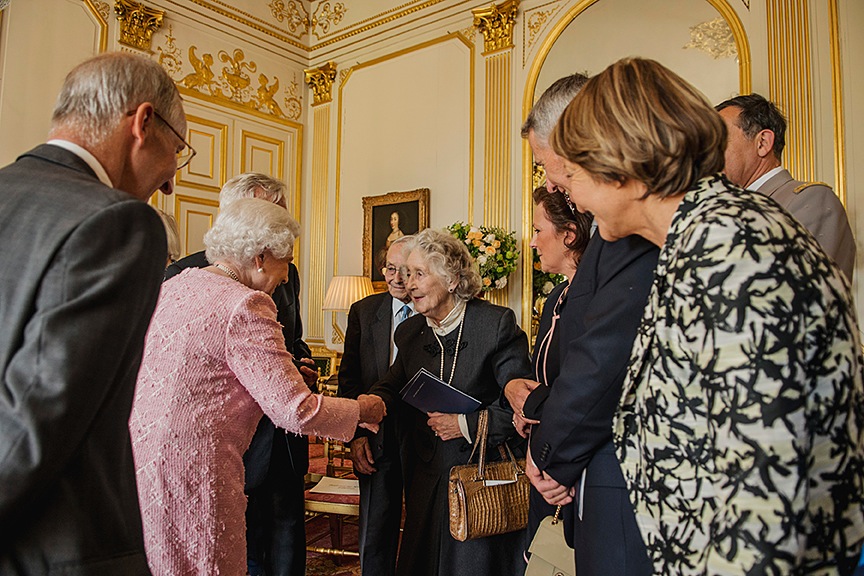
I was friends with Noreen and her family ever since I lived with them in France 1977-8. Thanks to the Official Secrets Act it was only in 2000 that anyone learned of her war time service. This piece is based largely on a conversation we had eight years ago during one of her regular stays at the Special Forces Club in Knightsbridge, London. In January 2025 I officiated at her funeral in France. A very lovely and remarkable woman.
The monologue was performed at Doppelgangers Writers event at Chaplins Boscombe.
 Paul Canon Harris
Leave a comment